
How to Score 180/180 in Physics in NEET 2027
If you’re preparing for NEET 2027, you’ve probably heard students say, “Physics is the toughest subject.” It’s a common belief, but it isn’t always true.
Every year, many students score exceptionally well in Physics—not because they’re naturally gifted, but because they follow a structured approach and stay consistent.
The truth is simple: Physics rewards understanding and regular practice. Once your concepts are clear, solving questions becomes much easier.
In this guide, I’ll walk you through a realistic strategy that can help you aim for a 180/180 score in NEET Physics.
HO
Is 180/180 in NEET Physics Really Possible?
Yes, it is.
Every year, students across India achieve full marks in Physics. They don’t study 15 hours a day or memorize every formula overnight. Instead, they build strong concepts, practice quality questions, and revise regularly.
Your goal shouldn’t be to “study more.”
Your goal should be to study the right way.
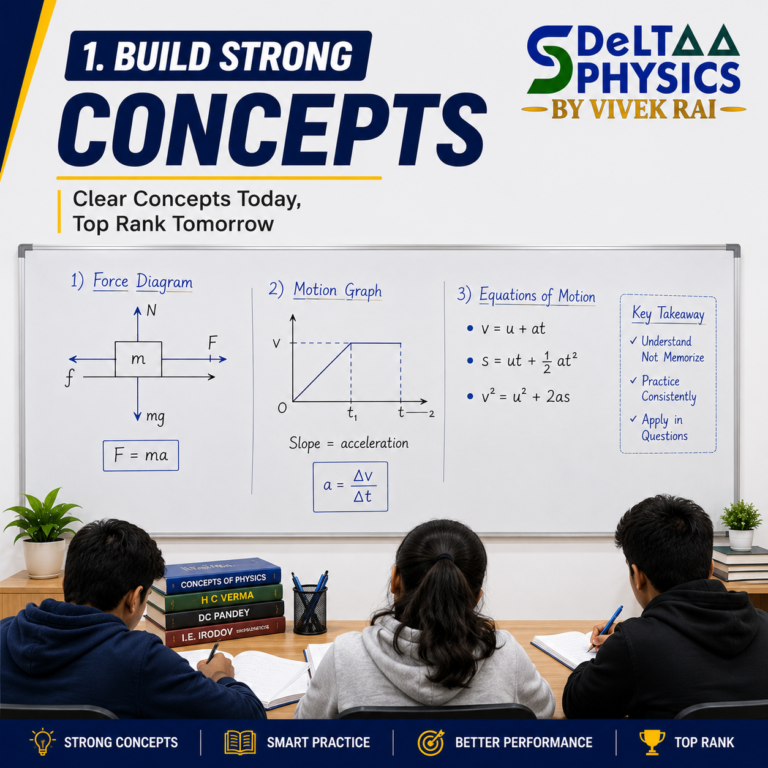
Step 1: Build Strong Concepts Before Solving Questions
One mistake many students make is jumping straight into MCQs after reading a chapter once.
Imagine learning to ride a bicycle. You wouldn’t enter a race after five minutes of practice.
Physics works the same way.
Before solving questions, make sure you understand:
- Why a formula works
- When to apply it
- What each variable represents
- The concept behind every derivation
When your concepts are clear, even unfamiliar questions become manageable.
Step 2: Focus More on High-Weightage Chapters
Not every chapter contributes equally to the exam.
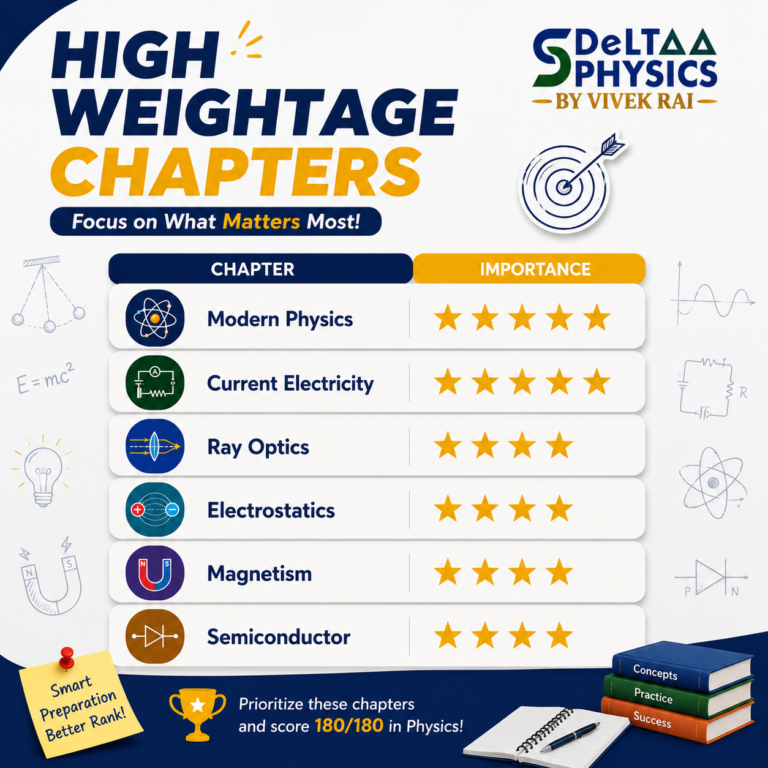
Spend extra time on chapters that frequently appear in NEET.
Some important topics include:
- Current Electricity
- Ray Optics
- Electrostatics
- Magnetism
- Modern Physics
- Semiconductor Electronics
- Wave Optics
- Laws of Motion
- Work, Energy and Power
- Rotational Motion
This doesn’t mean you should ignore other chapters.
Complete the entire syllabus, but give additional attention to chapters that carry more weight.
Step 3: Practice Questions Every Single Day
Physics cannot be mastered by reading alone.
You have to solve problems.
A good target is:
- 40–60 quality MCQs every day during the early stages
- 80–100 questions during revision phase
Don’t worry if your accuracy is low in the beginning.
Making mistakes is part of learning.
The important thing is to understand why you got a question wrong.
Step 4: Memorize Formulas the Smart Way
Many students try to memorize formulas by reading them repeatedly.
A better approach is to use them while solving questions.
Create a small formula notebook and revise it every day.
When you solve enough questions, formulas become natural.
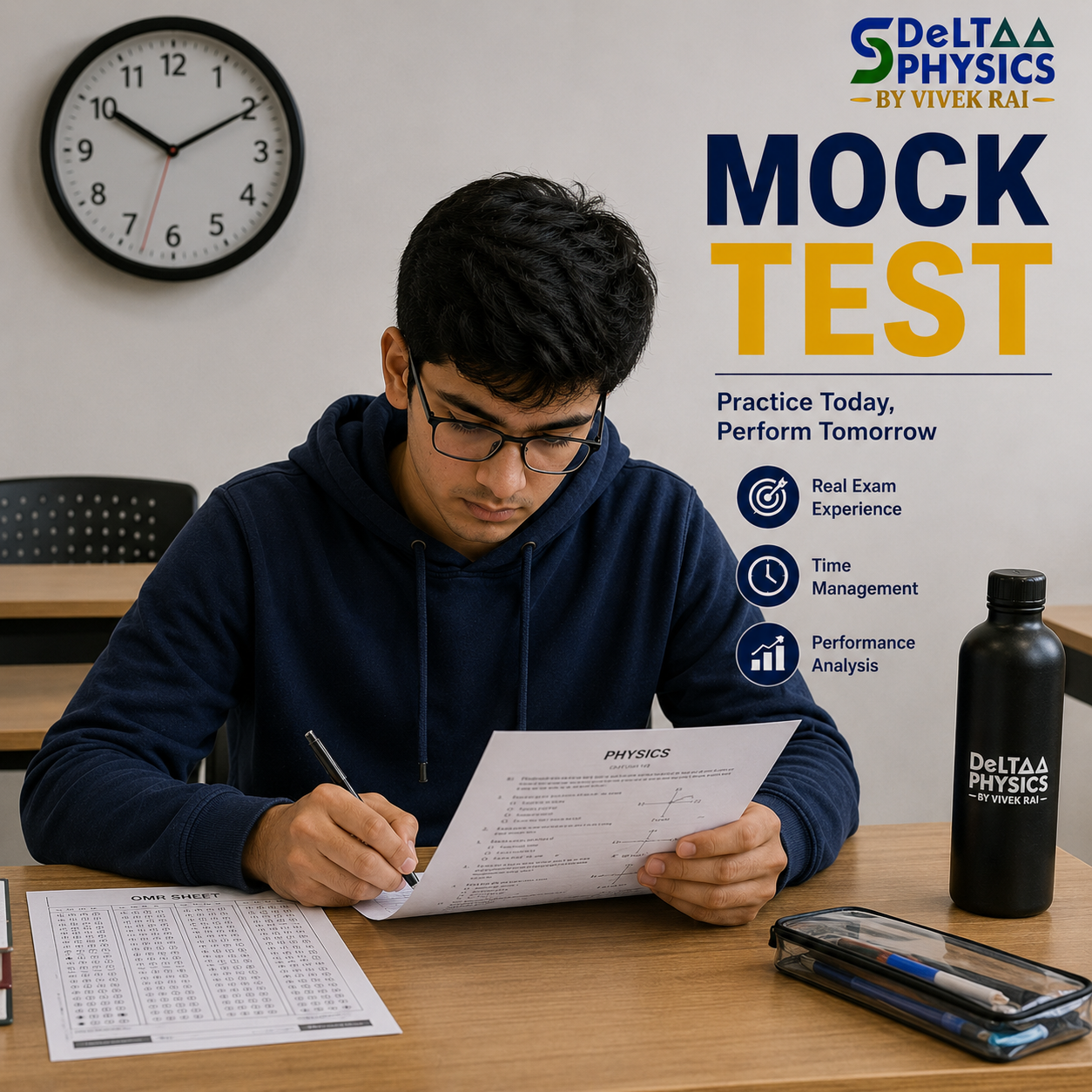
Step 5: Give Mock Tests Like the Real Exam
Mock tests aren’t just for checking your marks.
They’re for improving your exam strategy.
After every test, ask yourself:
- Which chapter caused the most mistakes?
- Did I lose marks because of calculation errors?
- Did I panic during difficult questions?
- Was my time management effective?
Learning from mock tests is more valuable than simply collecting scores.
Common Mistakes That Stop Students from Scoring Full Marks
Avoid these common errors:
- Studying without understanding concepts
- Ignoring NCERT
- Solving random questions without analysis
- Skipping revision
- Avoiding mock tests
- Memorizing formulas without application
- Giving up after a few low scores
Remember, your preparation is a journey. Improvement happens gradually.
Improve Accuracy Instead of Attempting Everything
Many students think attempting all questions guarantees a high score.
Not necessarily.
One careless mistake can cost valuable marks.
Focus on:
- Reading the question carefully
- Avoiding silly calculation errors
- Eliminating wrong options
- Managing time wisely
Accuracy often matters more than speed.
Frequently Asked Questions
Can I score 180/180 in NEET Physics if I’m average?
Yes. Many top scorers started as average students. Clear concepts, regular practice, and disciplined revision matter more than where you begin.
How many hours should I study Physics daily?
Quality is more important than quantity. Around 2–3 focused hours every day, combined with consistent question practice, can be highly effective.
Is NCERT enough for NEET Physics?
NCERT is the foundation. Pair it with quality MCQ practice and previous years’ questions for complete preparation.
How many mock tests should I attempt?
Aim for one full-length mock test every week initially. Increase the frequency as the exam approaches.